
How Much Should a Service Business Spend on Marketing?
HOW MUCH SHOULD YOU ACTUALLY SPEND ON MARKETING AS A SERVICE BUSINESS?

Stop guessing. Here is the simple way to set a marketing budget that turns spend into booked jobs.
If you have ever stared at your bank account and wondered whether you are spending too much on marketing, too little, or just throwing money at the wrong stuff, you are not alone. Almost every contractor, cleaner, junk hauler, and home service pro I talk to has the same question. They know they need to market the business. They just have no idea what the right number actually is.
Here is the good news. Setting a marketing budget for your service business is not guesswork once you understand a few simple rules. You do not need an MBA or a finance background. You need a clear percentage to start from, a way to tell which spending actually works, and the confidence to stop pouring money into things that do not bring in calls.
In this post I am going to walk you through exactly how to set a marketing budget that fits your revenue, where that money should go, and how to know when you are spending too much or too little. By the end you will have a number you can actually work with.
WHY "JUST SPEND MORE" IS BAD ADVICE
Plenty of people will tell you that the answer to slow months is to spend more on marketing. Sometimes that is true. Usually it is not. Spending more on a broken plan just loses money faster.
The real goal is not to spend the most. It is to spend in a way where every dollar in brings more than a dollar back. A small budget that is spent well will beat a big budget that is spent badly every single time.
Think about it like running a job. You would not buy ten thousand dollars of materials before you knew the scope of the work. Marketing is the same. You start with a smart, controlled amount, you measure what it returns, and then you scale up the parts that work.
THE SIMPLE PERCENTAGE RULE TO START FROM
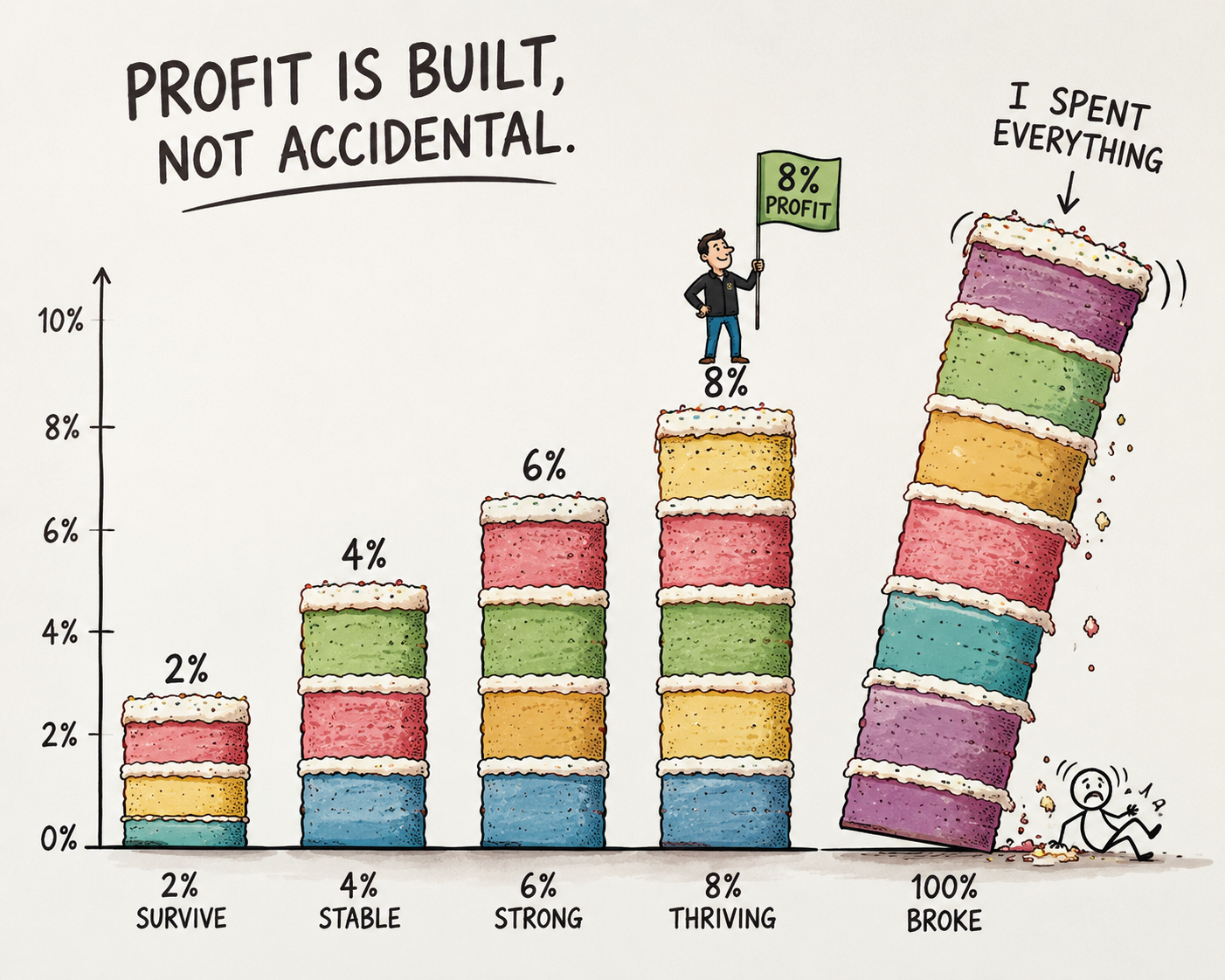
Here is the anchor number to keep in your head. Most healthy service businesses spend somewhere between 7 and 10 percent of their gross revenue on marketing. Newer businesses that are trying to grow fast often push that to 10 or even 15 percent because they are building from a small customer base. Established businesses that mostly want to stay booked can sit at the lower end, around 5 to 7 percent.
Let me make that real with numbers:
A business doing 200,000 dollars a year at 8 percent would spend about 16,000 dollars a year on marketing, which is roughly 1,300 dollars a month.
A business doing 500,000 dollars a year at 8 percent would spend about 40,000 dollars a year, or roughly 3,300 dollars a month.
A brand new business doing 80,000 dollars a year but trying to grow might push to 12 percent, which is about 800 dollars a month.
The point is not to copy these exact numbers. The point is to anchor your budget to your actual revenue, not to what some competitor is doing or what a salesperson tells you to spend.
Here is how that lands in the real world. A 497 dollar a month managed plan fits comfortably inside the marketing budget of a business doing anywhere from about 75,000 to 200,000 dollars a year, and it covers the foundation and follow up work that most owners struggle to keep up with on their own. A business doing 400,000 dollars a year or more, or one that wants the whole engine handled so they can focus on the work, is usually better served by a full done for you plan around 2,500 dollars a month. Either way you are landing inside that healthy 7 to 10 percent range, not guessing. [Check out these packages]
HOW TO SPLIT THE BUDGET SO IT ACTUALLY WORKS
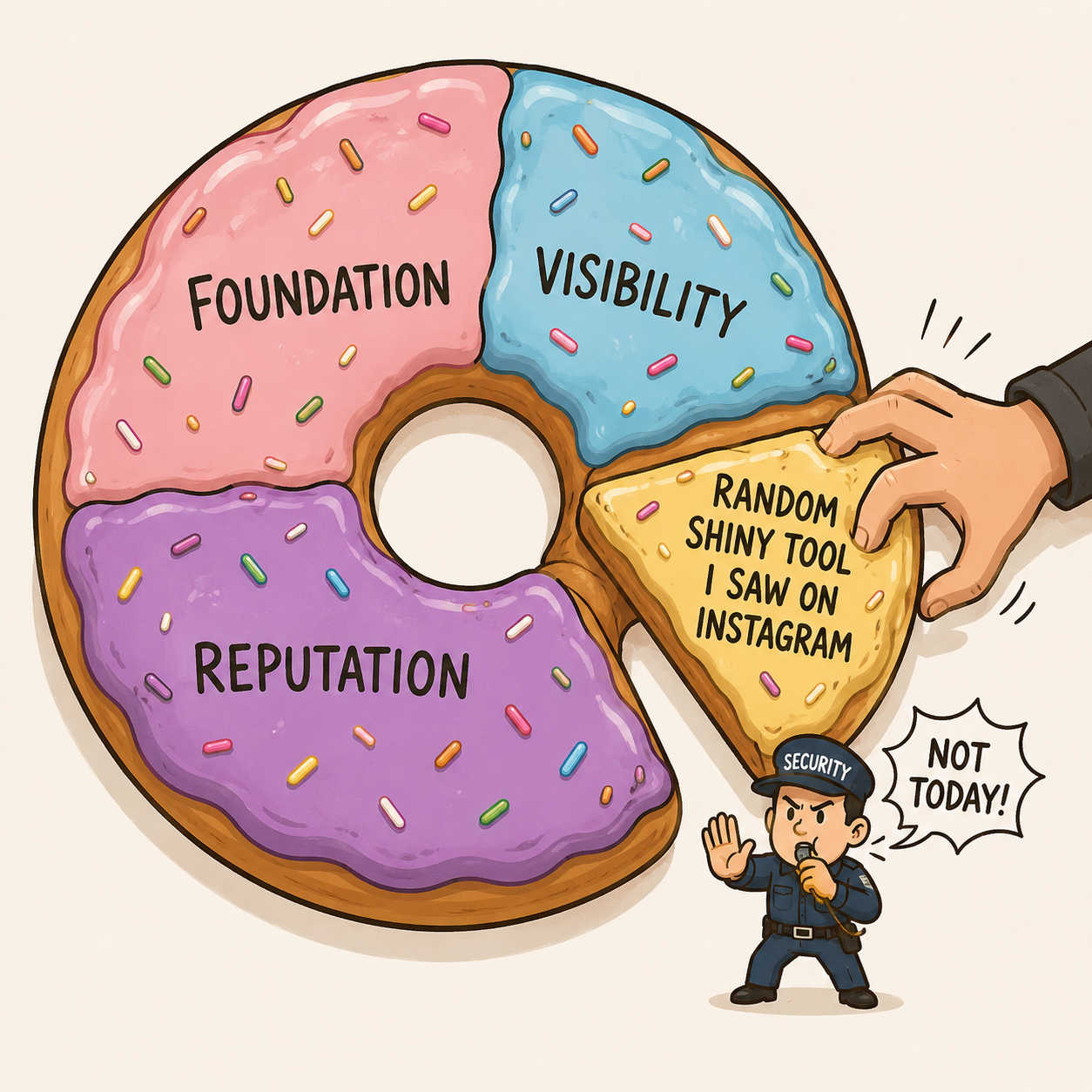
Once you have your monthly number, the next question is where it goes. A common mistake is dumping everything into one channel, like only running ads or only posting on social media. A balanced split protects you when one channel slows down.
Here is a simple starting split for a local service business:
Foundation (about 40 percent): your website, your local search presence, and your booking or follow up system. This is the stuff that turns attention into booked jobs. If this is weak, every other dollar leaks out.
Visibility (about 40 percent): the work that gets you found. Local ads, search ads, and showing up in local listings so customers can find you when they are ready to buy.
Reputation and retention (about 20 percent): reviews, content, email and text follow up to past customers, and anything that keeps you top of mind so you get repeat work and referrals.
For example, a softwashing company on a 497 dollar a month done for you plan already has the foundation and retention pieces handled, their site, booking system, content, and review and follow up automations all run for them in one place. That frees them to put their remaining budget straight into visibility, like local search ads during their busy season. That balance means a slow ad month does not sink them, because the system keeps reviews coming and past customers coming back. This is exactly why a managed monthly plan beats stitching together a pile of separate tools you have to babysit yourself.
THE NUMBER THAT MATTERS MORE THAN YOUR BUDGET

Here is the part most business owners miss. Your budget is far less important than your cost to get a customer and what that customer is worth to you.
Two quick terms in plain English:
Cost to acquire a customer: how much you spend on marketing to land one paying job. If you spend 1,000 dollars in a month and get 5 new customers, your cost to acquire is 200 dollars each.
Customer lifetime value: how much a customer is worth to you over time, including repeat work and referrals.
This is the math that tells you whether you are spending too much. If a new lawn care customer costs you 100 dollars to acquire but is worth 2,000 dollars over the next two years, you should happily spend that 100 dollars all day long. If a customer costs you 600 dollars to acquire but is only worth 400 dollars, you are losing money no matter how nice your ads look.
Once you know these two numbers, your budget question almost answers itself. You spend as much as you can while your cost to acquire stays comfortably below your customer value. HOW TO TELL IF YOU ARE SPENDING TOO MUCH OR TOO LITTLE
You do not need fancy software to know if your budget is off. Watch for these signs.
You are probably spending too little if:
Your phone goes quiet for stretches and you have no pipeline of new leads.
You are relying entirely on word of mouth and cannot grow past your current size.
Competitors keep showing up where customers are looking and you do not.
You are probably spending too much or spending badly if:
You cannot point to where your leads are actually coming from.
You are paying for tools and services you do not use or do not understand.
Your cost to acquire a customer is creeping up toward or past what that customer is worth.
A junk removal owner I worked with was spending close to 3,000 dollars a month and felt broke, but he could not tell me which 3,000 dollars was working. Once we tracked it, half was bringing in steady jobs and half was vanishing into a tool he barely used and an ad set targeting the wrong town. We did not increase his budget. We just stopped the leaks. His booked jobs went up while his spend went down.
THE COST OF SPENDING NOTHING

It is tempting, especially in a slow season, to cut marketing to zero and wait it out. I get it. But going dark is one of the most expensive things a service business can do.
When you stop marketing, the leads do not stop right away. They dry up a few weeks or months later, right when you need them most. Then you are starting from a cold stop, which is slower and harder than keeping a steady, modest spend going year round. A smaller consistent budget almost always beats big bursts followed by long silences. Check out our clients who thought marketing was expensive and not for them, like our client Frenchy's Junk Removal.
YOUR QUICK MARKETING BUDGET CHECKLIST
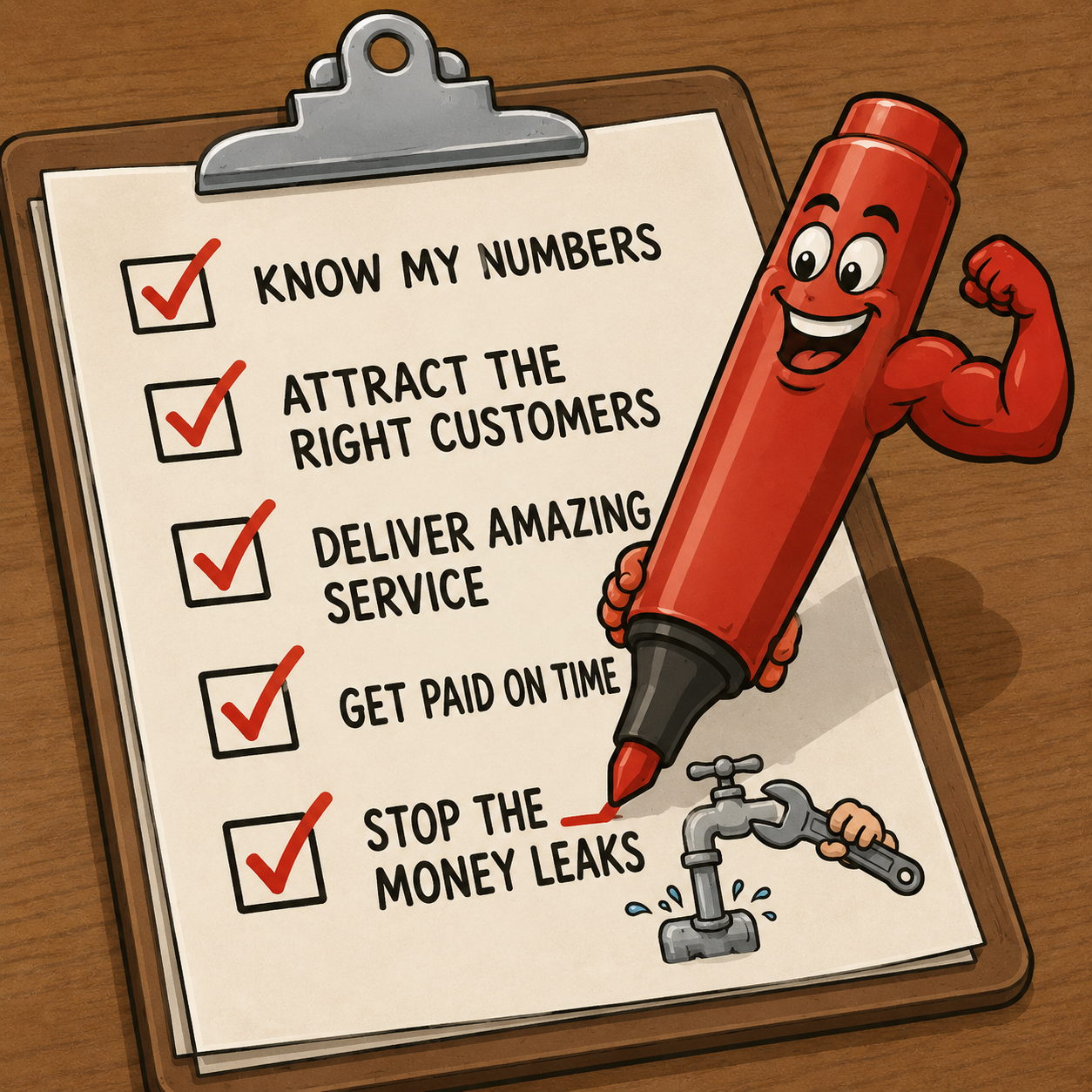
Do these today and you will have a real budget instead of a guess:
Pull your gross revenue for the last 12 months and multiply by 8 percent. That is your starting annual marketing budget.
Divide that by 12 to get your monthly number.
Split it roughly 40 percent foundation, 40 percent visibility, 20 percent reputation and retention.
Figure out your cost to acquire one customer, even a rough estimate.
List every marketing tool and service you pay for and cut anything you cannot tie to leads or jobs.
Set a monthly reminder to check what is working and shift money toward it.
READY TO STOP GUESSING?
Setting the number is the easy part. The harder part is building a system where every marketing dollar is tracked, working, and feeding more booked jobs into your calendar. That is exactly what we build for service businesses every day.
If you want a clear picture of where your marketing money should go and a system that turns it into steady, booked work, book a quick demo or a free consult with my team. We will look at your real numbers and point you to the right plan, whether that is our 497 dollar a month managed option or a full done for you plan, so you spend in the right place from day one. [Watch my quick demo]
You work too hard for your money to watch it disappear into marketing that does not bring the phone to life. Let us fix that.
Talk soon,
Teresa G. Sivak Founder, TGS Marketing